Conditioned Feed
Material is spread into a stable layer optimized for spectral capture.
When colour and shape are insufficient, spectral information adds evidence for material-related differences. Validate actual samples before selecting sensors and equipment.
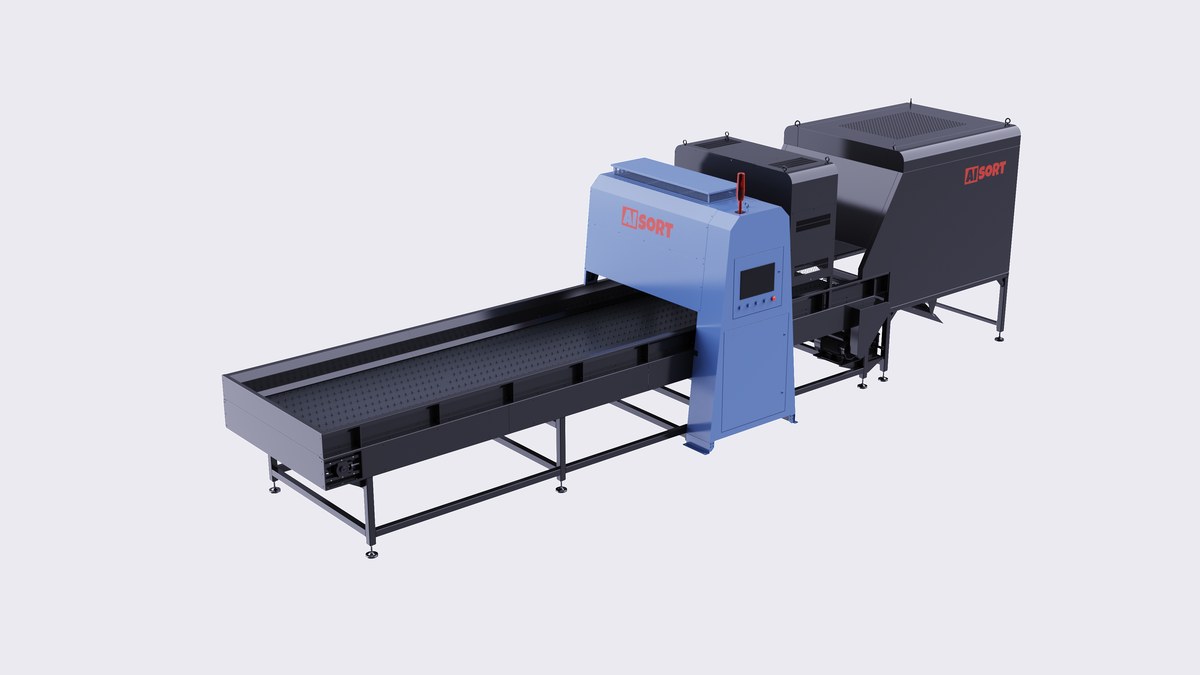 AISORT / 03SPECTRAL SORTING
Spectral data is one input to a multi-sensor solution. Acquisition conditions, surfaces and target differences affect results. Assess bottles and flakes separately.
Where colour and shape do not distinguish the required classes, spectral signals can add material-related evidence. Select sensing and recognition settings with representative samples, then connect classification to physical separation. Confirm material applicability and performance through trials.
Add information when colour and shape cannot answer the separation question.
Compare actual spectral response from targets and similar non-targets.
Record size, moisture, labels and surface residues.
Assess conveying, separation hardware and output requirements with the sensing result.
Material is spread into a stable layer optimized for spectral capture.
The system reads spectral signatures across multiple wavelengths to identify subtle differences.
Classification logic combines spectral data and process settings to isolate accepted fractions.
Target and reject streams are separated for high-purity downstream processing.
Reference figures support initial selection. Throughput, belt speed and separation depend on the model, material, feed presentation and air supply. Confirm the final configuration and capability through technical information and material trials. The spectral range is a configuration reference; confirm the sensor and applicable materials with representative samples.
Request technical information ↗| Reference throughput | 1–6 t/h |
|---|---|
| Reference spectral range | 900–1700 nm |
| Technology | Spectral information for material-related discrimination |
| Sensing configuration | Selected for the task and equipment solution |
| Validation feed | Representative targets and similar non-targets |
| Process position | Determined by feed and adjacent processes |
| Equipment parameters | Refer to the corresponding model and trial |
Explore the equipment
from another angle.
No universal result applies. Validate material, surface, sensor configuration and task using real samples.
Grinding and washing change size and surfaces, so establish separate validation conditions.
Share your feedstock, recovery targets and plant layout. Build the next step with an AISORT engineer.
Talk to sales engineering ↗