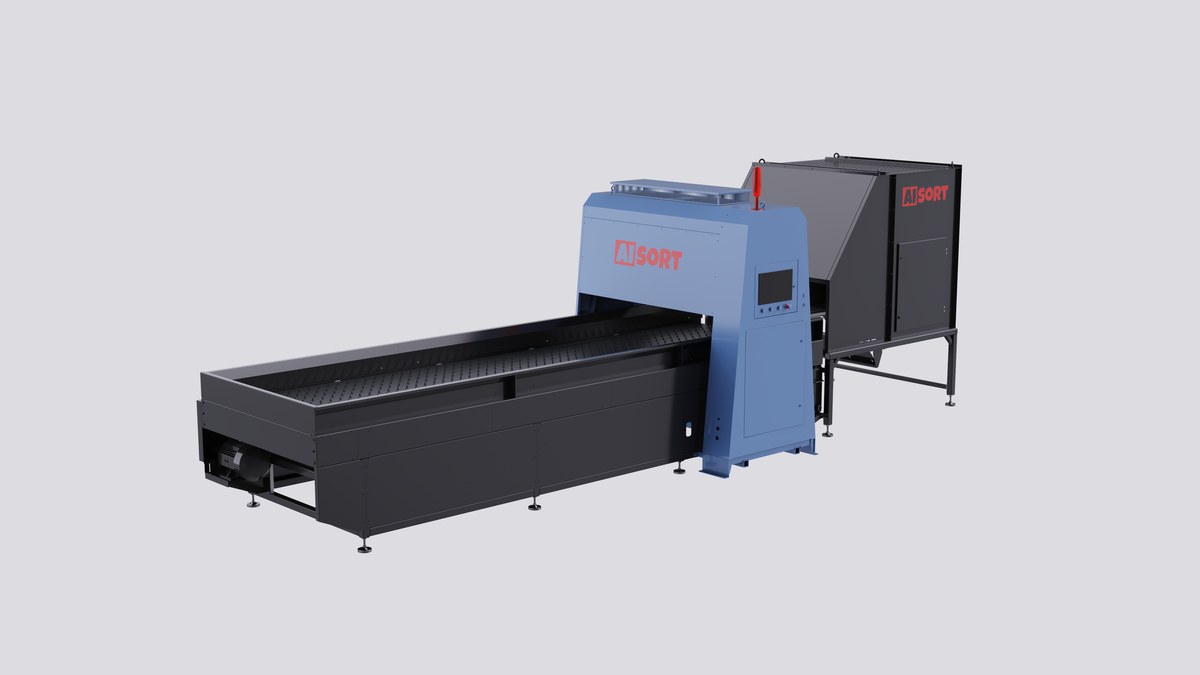
High-speed optical sorting platform for 3 to 10 t/h packaging, film and mixed polymer lines where visual recognition speed and stable ejection timing are the main priorities.
3-10 t/h
Throughput
10 ms
Recognition Latency
5.0 m/s
Belt Speed
Quick answer
When this high-speed vision sorter is the right fit
Quick answer: use the AISORT High-Speed Vision Sorter when a recycling line needs high conveyor speed, stable object recognition and reduced manual sorting across rigid packaging, film fractions or mixed polymer streams.
The platform is best suited to operators balancing throughput and output consistency. It is not only a camera upgrade, but a line-speed platform for plants that need fast classification, predictable ejection timing and retrofit-friendly deployment.
Best-fit throughput
3 to 10 t/h
A practical range for high-volume rigid packaging, light packaging and mixed polymer recovery lines.
Recognition latency
10 ms
Short processing latency helps maintain ejection timing on faster conveyor speeds.
Belt speed
Up to 5.0 m/s
Useful where line economics depend on speed, not only on single-pass purity claims.
Typical role
High-speed sorting stage
Strong fit for modern lines where labour reduction and throughput growth matter together.
Best-fit scenarios
Rigid packaging recovery
Use it where the line must keep up with high packaging volume while maintaining stable visual recognition and fast ejection.
Film and lightweight fractions
Useful in high-speed lines that need better separation discipline than coarse mechanical sorting alone can provide.
Retrofit throughput upgrades
Strong fit when an operating plant wants more speed without a full greenfield rebuild.
Mixed polymer pre-concentration
Works well as a fast front-end classification layer ahead of tighter downstream purity stages.
How to decide if this platform fits your line
1. Start with the line objective
This machine is strongest when the main project objective is higher line speed with better consistency than manual sorting or low-resolution vision can deliver.
2. Check feed presentation quality
High-speed sorting only performs well if material singulation, burden depth and spread profile are controlled upstream. Feed preparation is part of the answer, not an afterthought.
3. Match sensor logic to the material question
If the line challenge is mainly visual recognition at speed, this platform is strong. If the challenge is deep polymer discrimination, a multisensor or NIR-led stack may be the better route.
4. Evaluate retrofit constraints early
Conveyor width, utilities, discharge paths, dust load and access space should all be validated before quoting the final machine configuration.
When not to use this platform
This high-speed vision sorter is not always the best answer. Consider another AISORT platform first if your priority is ultra-tight polymer discrimination, or a stream with poor singulation that will stay chaotic even after line preparation.
Do not use it as the only answer when the real issue is upstream material presentation.
Do not assume maximum throughput and maximum purity happen at the same settings.
Do not choose it over a multisensor platform if the feedstock problem is primarily spectral, not visual.
Overview
The AISORT High-Speed Vision Sorter uses high-frame-rate imaging, FPGA-accelerated processing and AI classification to separate materials at elevated conveyor speeds. It is suited to facilities that prioritize throughput, stable ejection timing and lower operator dependence.
Key Advantages
Fast Vision Processing
Short recognition latency keeps separation accuracy stable even on fast-moving conveyor lines.
Broad Material Compatibility
Supports rigid plastics, film fractions, packaging waste and selected e-waste pre-processing tasks.
Scalable Throughput
Configurable line widths and belt speeds allow the system to fit both regional and industrial-scale facilities.
Reduced Manual Sorting
Automates labor-intensive tasks in facilities that need higher speed with more consistent output quality.
Model Optimization
AI models can be tuned for specific feedstock conditions and contamination patterns.
Retrofit Friendly
Can be integrated into existing conveyors and upgraded step by step inside operating plants.
Applications
Mixed rigid packaging sorting.
Film and lightweight packaging separation.
Color grading for washed material or pellet preparation.
High-speed line modernization for municipal and commercial waste recovery.
How It Works
1
Line Stabilization
Material is spread uniformly to improve camera visibility and separation consistency.
2
High-Speed Capture
Multiple cameras inspect moving material at production belt speeds.
3
AI Classification
Vision models classify targets by shape, color and appearance within milliseconds.
4
Air Ejection
Fast-response valves remove targets into dedicated discharge zones.
Specifications
Recognition Method
High-speed AI vision and FPGA acceleration
Throughput
3-10 t/h
Belt Speed
Up to 5.0 m/s
Typical Feedstock
Rigid plastics, film, packaging waste
Installation
Standalone or retrofit conveyor integration
Power Supply
380V / 50Hz / 3-phase
Common buyer questions
These answers are written for plant operators, recyclers and engineering teams comparing high-speed optical sorting platforms.
What materials is this sorter best suited for?
Quick answer: it is best suited to fast-moving rigid packaging, mixed polymers, lightweight packaging and similar streams where visual recognition at speed is the main requirement.
The platform works best when the line objective is stable classification under fast conveyor conditions. It is particularly useful when the plant already has coarse upstream preparation but needs a stronger high-speed recognition layer to improve output consistency.
How does it differ from a tower optical sorter?
Quick answer: the high-speed vision sorter is chosen when line speed and visual classification dominate, while tower optical sorters are often chosen when vertical form factor and specific air-jet separation architecture are a better fit.
The right choice depends on your stream, installation geometry and whether the material problem is mainly visual, mainly spectral or a combination of both. In practice, the comparison should be made at line level, not only machine level.
Can it be retrofitted into an existing line?
Quick answer: yes, retrofit is often a strong use case, but conveyor layout, utilities, discharge routing and maintenance access must be checked first.
Retrofit projects succeed when the plant validates physical space, feed stability and controls integration early. If the line is too unstable upstream, machine replacement alone may not deliver the expected result.
What is the main reason to choose this platform?
Quick answer: choose it when project economics are dominated by throughput, labour reduction and repeatable visual sorting performance on fast conveyors.
This platform is a strong answer when a plant needs more line speed without accepting unstable manual sorting or large purity swings. If the main question is deeper material identification rather than conveyor speed, another AISORT platform may be more suitable.
Suitable materials and output targets
Best suited to high-speed packaging and mixed polymer streams where throughput, labour reduction and stable classification matter more than narrow single-material specialization.
Rigid packaging streams
Handles mixed PET, HDPE, PP and other rigid container fractions on high-speed conveyors.
Film and lightweight packaging
Supports large-volume lines processing flexible packaging and mixed light fractions.
Flake color grading
Useful for post-wash grading and quality refinement where line speed remains high.
Retrofit throughput upgrades
Strong fit when existing lines need more speed without complete plant reconstruction.
Recommended solution paths
Use these solution paths when the machine decision depends on throughput growth, retrofit constraints and downstream value recovery rather than machine specs alone.
Plastic Waste Value Optimization
Increase throughput and bale quality for mixed rigid and packaging recovery lines.
Best fit for high-throughput packaging and mixed polymer lines
Strong choice when visual recognition speed is the main bottleneck
Retrofit-friendly for plants that need more speed without a full rebuild
Useful where labour reduction and output stability drive the business case
Need a product-fit recommendation?
Share feed material, target purity, belt speed and expected throughput. AISORT can confirm whether this platform or a multisensor route is the better fit.